
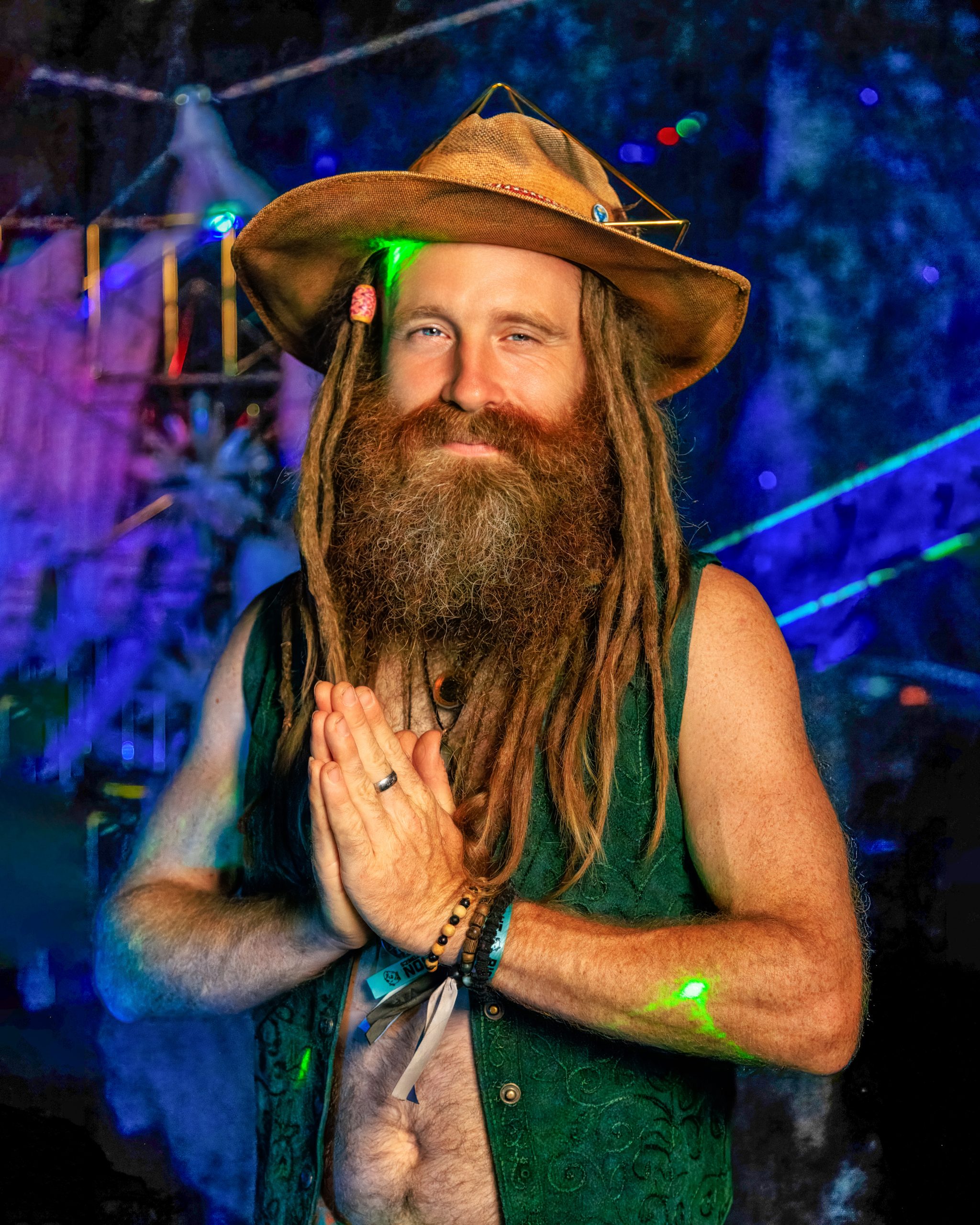
What we built at Convergence Wellness Campout, and why our work becomes an environment rather than a device
There is a difference between a lamp and a campfire. A lamp lights a room. A campfire changes how people sit, how long they stay, how quietly they talk, and who ends up beside them. Both give off light. Only one of them makes a place.
That difference is the reason Mountain’s Daughter Health so often shows up at an event with an installation instead of a single device on a table. In September we brought the Portal of Light to Convergence Wellness Campout, a four-day retreat festival held September 17 to 20, 2026, at Astral Valley Art Park in the Missouri Ozarks. This is what we built there, and what the research does and does not say about why it matters.
Building in daylight
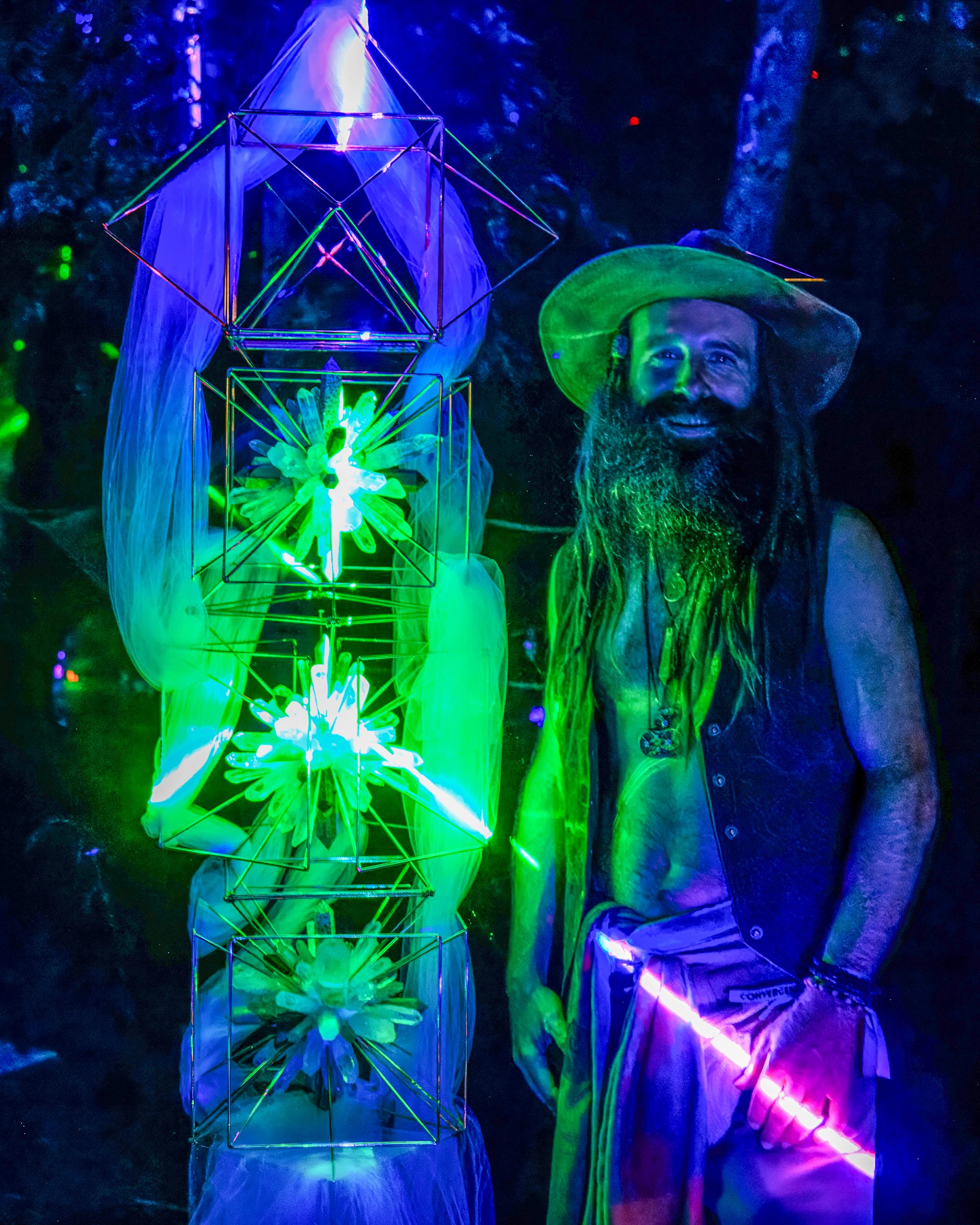
An installation starts long before dark. In the afternoon the site is just woods: trees, a slope, uneven ground, and whatever the light is doing through the canopy. We hang white fabric between the trunks, set gold geometric frames in a column, and seat crystal clusters inside them, so that the structure reads as part of the forest rather than something dropped into it.
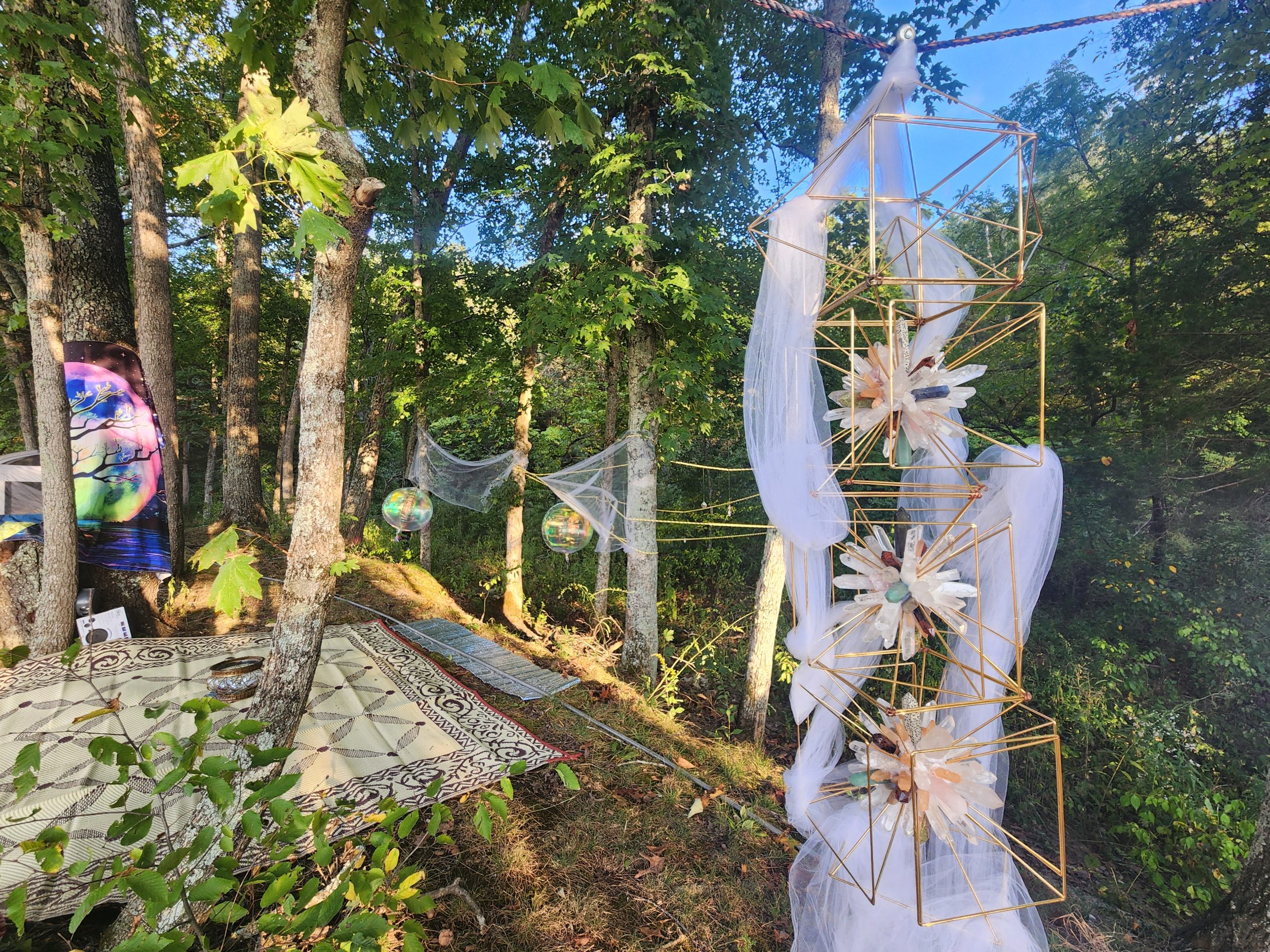
By daylight it is sculpture. The Portal of Light only becomes itself after sunset.
After dark
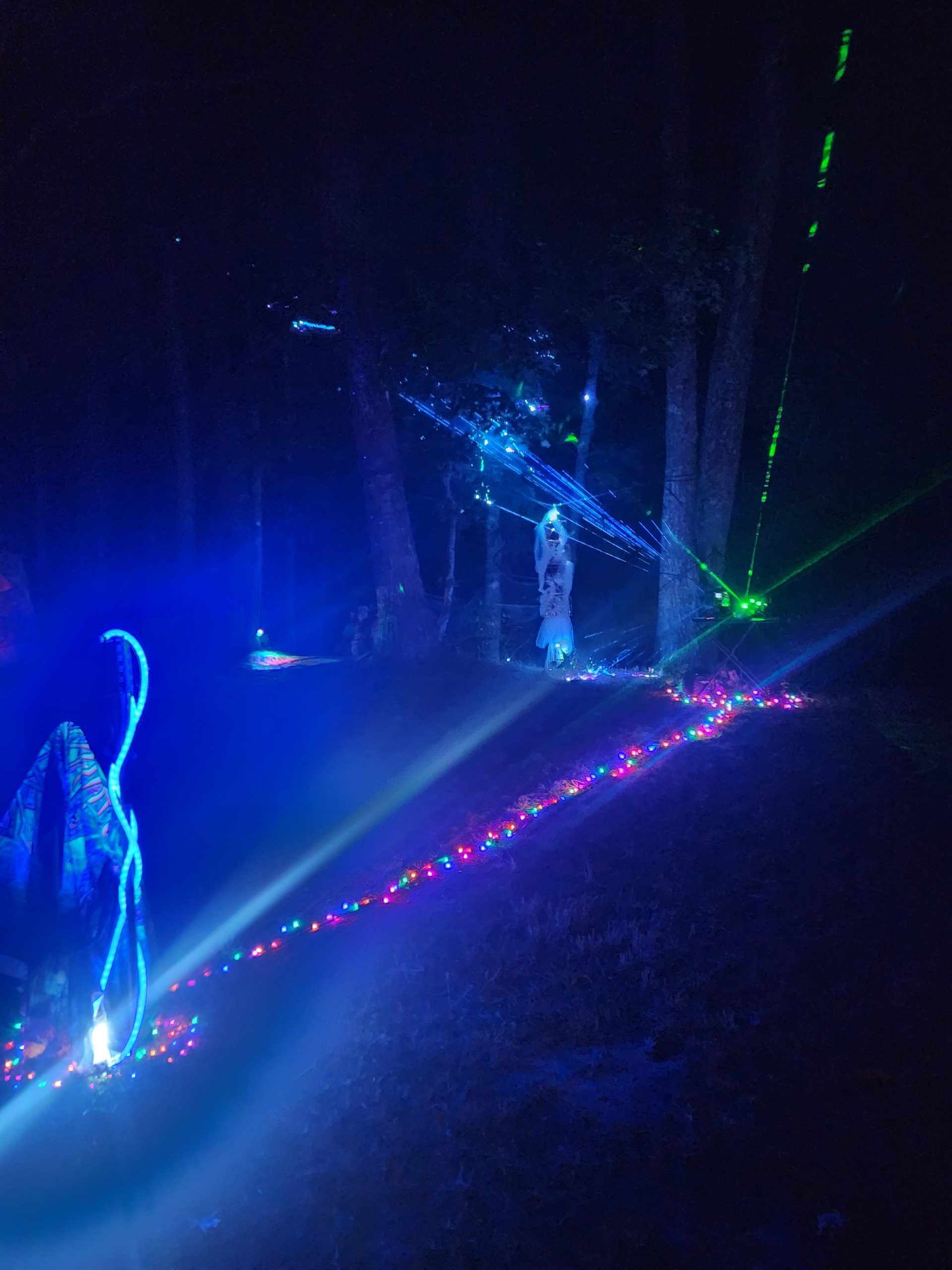
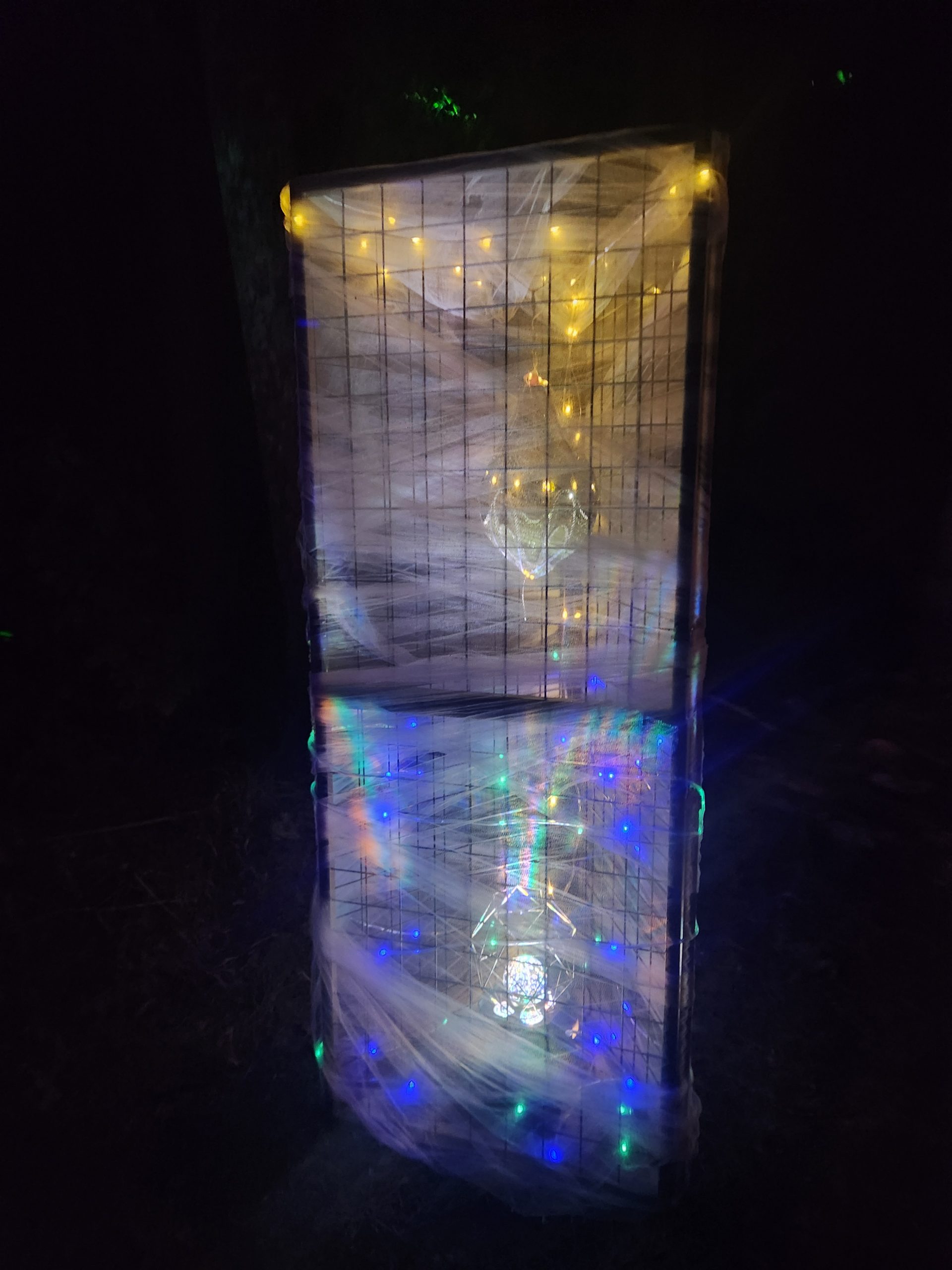
At night, a path of colored light runs along the ground through the trees. It leads toward a ring of green laser light framing an illuminated lattice, with blue light washing the trunks on either side. Beams cross overhead through the haze. The path is there for a reason: it asks people to walk toward the portal instead of glancing at it from a distance, and walking changes the pace at which a person arrives.
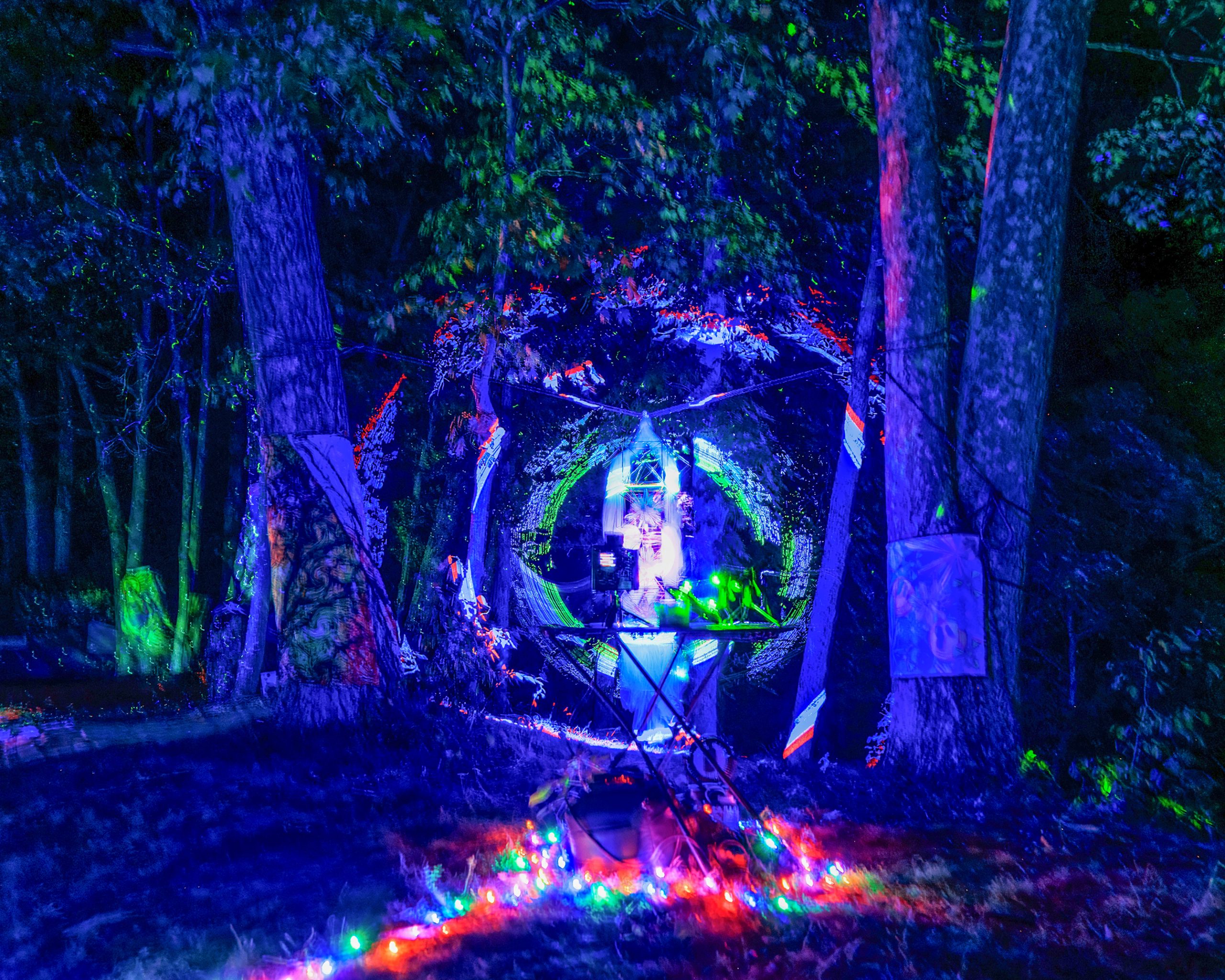
Inside the lattice panels, fabric softens the light and the crystal geometry breaks it into color. Up close, what looked like a single glowing panel becomes layers: grid, fabric, crystal, and scattered points of light that shift as a person moves.
Why an environment
In One Body, Three Signals I wrote that the environment itself counts. That is a claim worth checking, and the research is more interesting than a simple yes.
The most direct evidence comes from studies that hold the content constant and change only the setting. Nowakowska et al. (2026) gave university students the same ten-minute relaxation program for five days in a row, either in immersive virtual reality or on an ordinary screen. The immersive group showed larger favorable shifts in heart rate variability and a significantly greater drop in perceived stress. As well, the authors are careful about what that shows: the intervention was short, there was no follow-up, and longer trials are needed.
Nature research adds a useful complication. When Scott et al. (2021) measured 67 adults before, during, and after a five-day trip into nature, they expected signs of physiological rest. They found the opposite, a pattern of parasympathetic withdrawal with heart rate rising during the trip, even though people reported better mood during the trip. The body and the experience did not move together.
The wider arts-and-health literature is large and varied. A scoping review for the World Health Organization drew on more than 900 publications, using designs that range from small pilot studies to randomized trials, and concluded that the arts can potentially affect both mental and physical health, while acknowledging that the quality of the evidence varies (Fancourt & Finn, 2019).
Put together, that is encouraging and humbling at once. Immersion appears to matter. What happens in the body during an immersive experience cannot be assumed from how the experience feels.
What we claim, and what we do not
On our Evidence Gradient, the Portal of Light sits in the fourth tier: experiential wellness art. What we say about it is what we can stand behind. It is a space designed for rest, wonder, and slowing down.
What we do not say matters as much. We do not claim the installation delivers a therapeutic dose of light. Photobiomodulation depends on dose, and that dose has not been measured in the installation (Huang et al., 2009). We do not claim it treats anything. We do not claim it changes physiology, because that has not been measured in this space, and the nature research above is a good reminder not to assume it. It is art, built with care, offered honestly. That is enough.
A lamp lights a room. A campfire makes a place. We build campfires.
What an event gets
When we come to a festival or retreat, the installation is one part of a larger offering. The Portal of Light anchors the night. A wellness tent offers introductory sessions during the day, including resonant light, microcurrent, and biofeedback. Our botanicals, teas and tinctures, are there for people who want something to take home after a session.
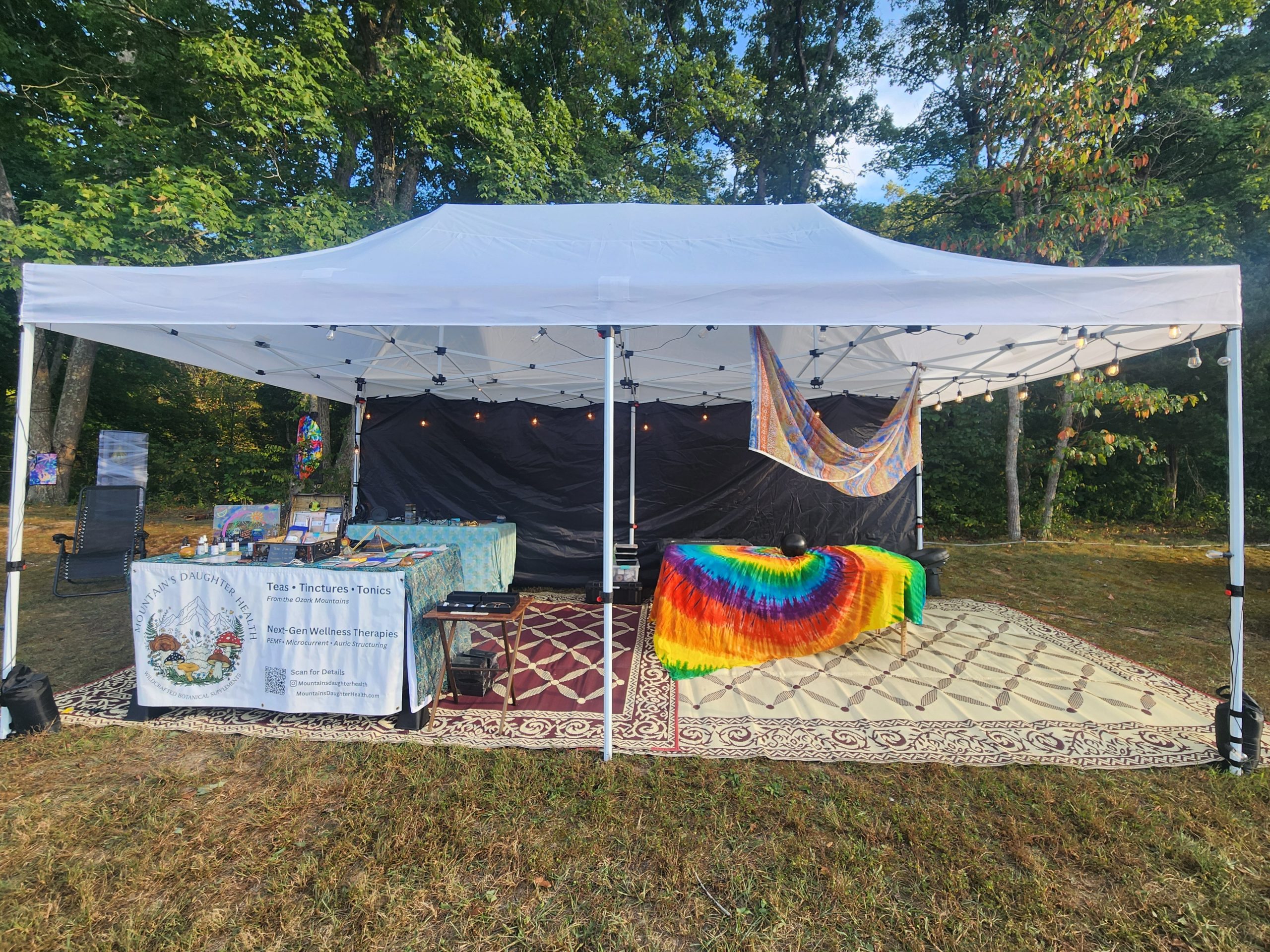
Every piece is described with the same labels, so organizers and guests know exactly what they are getting. The installation is art. The sessions are wellness experiences, not medical treatment. The difference is not fine print. It is part of the design.
To bring the Portal of Light to your event, see our installations.
What would your gathering look like with a portal in the woods?
References
Fancourt, D., & Finn, S. (2019). What is the evidence on the role of the arts in improving health and well-being? A scoping review (Health Evidence Network Synthesis Report No. 67). WHO Regional Office for Europe. https://www.ncbi.nlm.nih.gov/books/NBK553773/
Huang, Y.-Y., Chen, A. C.-H., Carroll, J. D., & Hamblin, M. R. (2009). Biphasic dose response in low level light therapy. Dose-Response, 7(4), 358–383. https://doi.org/10.2203/dose-response.09-027.Hamblin
Nowakowska, A., Nowak, M., Bigas, J., Gaweł, Z., Nęcki, M., & Rutkowski, S. (2026). Short-term psychophysiological effects of immersive versus non-immersive relaxation in university students: A randomized controlled trial. Healthcare, 14(15), Article 2322. https://doi.org/10.3390/healthcare14152322
Scott, E. E., LoTemplio, S. B., McDonnell, A. S., McNay, G. D., Greenberg, K., McKinney, T., Uchino, B. N., & Strayer, D. L. (2021). The autonomic nervous system in its natural environment: Immersion in nature is associated with changes in heart rate and heart rate variability. Psychophysiology, 58(4), Article e13698. https://doi.org/10.1111/psyp.13698