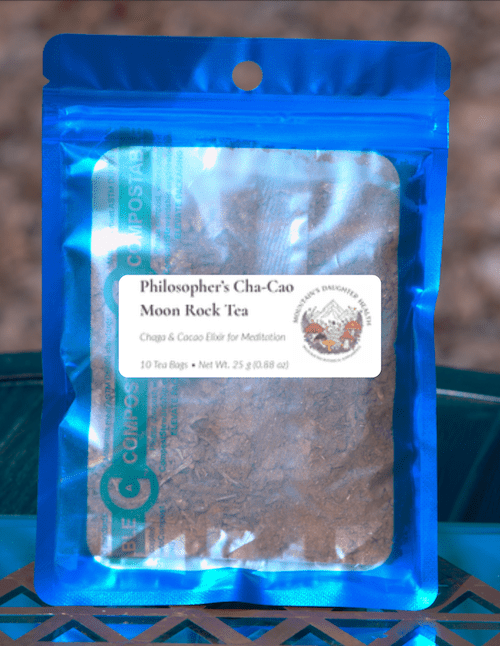
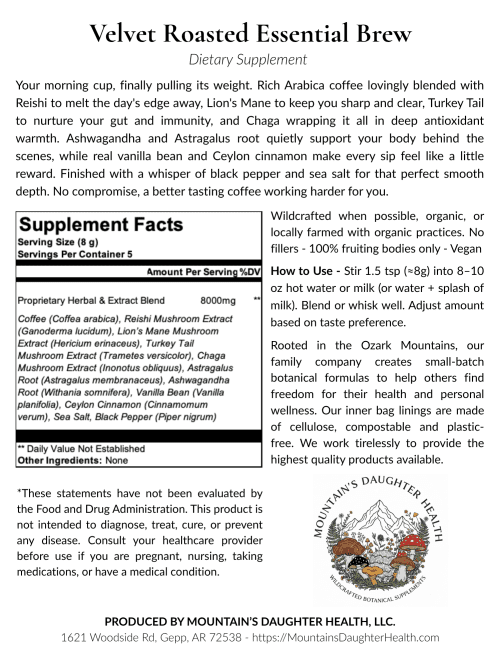
Chaga (Inonotus obliquus) is a dark, cracked fungal growth found mainly on birch trees in cold northern forests. It is one of the medicinal mushrooms studied for its phenolic compounds and triterpenes (Łysakowska et al., 2023).
What the Evidence Shows
Chaga shows strong antioxidant activity in laboratory tests, and reviews of medicinal mushrooms describe antioxidant, immune-modulating, and other effects from cell and animal research. Long-term clinical studies are still needed to confirm these effects, their safety, and appropriate amounts in people (Łysakowska et al., 2023).
A Note on Safety
Chaga is very high in oxalate. A published case report described serious kidney damage (oxalate nephropathy) in a 72-year-old woman who had taken 4 to 5 teaspoons of chaga powder a day for six months (Kikuchi et al., 2014). Chaga is best used in moderate amounts. Talk with your healthcare provider before using it if you have kidney problems or a history of kidney stones.
The research behind this entryReferences
Show sourcesHide sources
- Kikuchi, Y., Seta, K., Ogawa, Y., Takayama, T., Nagata, M., Taguchi, T., & Yahata, K. (2014). Chaga mushroom-induced oxalate nephropathy. Clinical Nephrology, 81(6), 440–444. https://doi.org/10.5414/CN107655
- Łysakowska, P., Sobota, A., & Wirkijowska, A. (2023). Medicinal mushrooms: Their bioactive components, nutritional value and application in functional food production. A review. Molecules, 28(14), Article 5393. https://doi.org/10.3390/molecules28145393