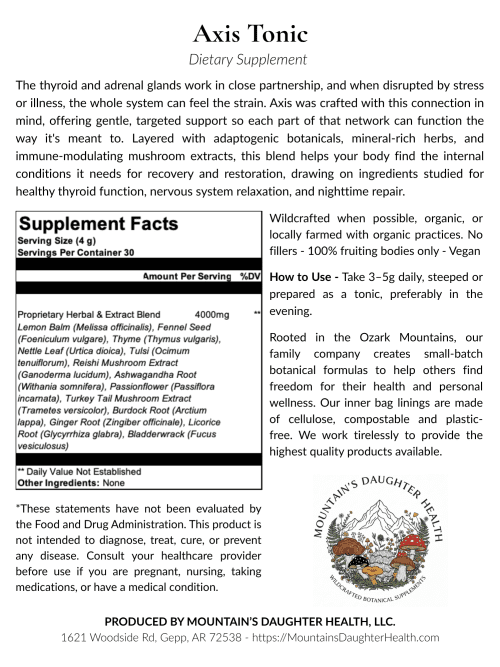
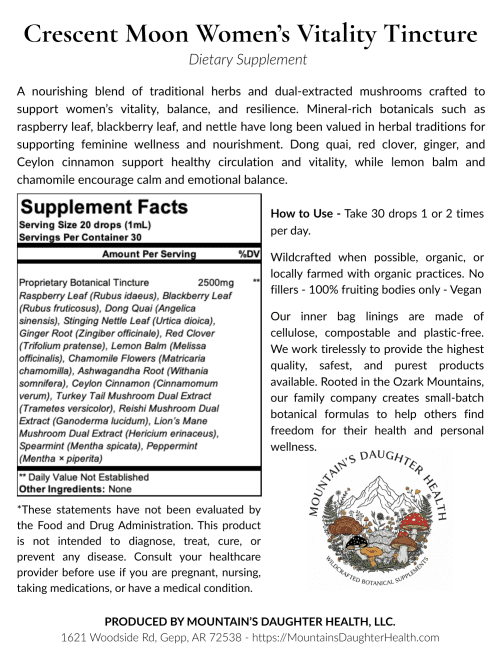
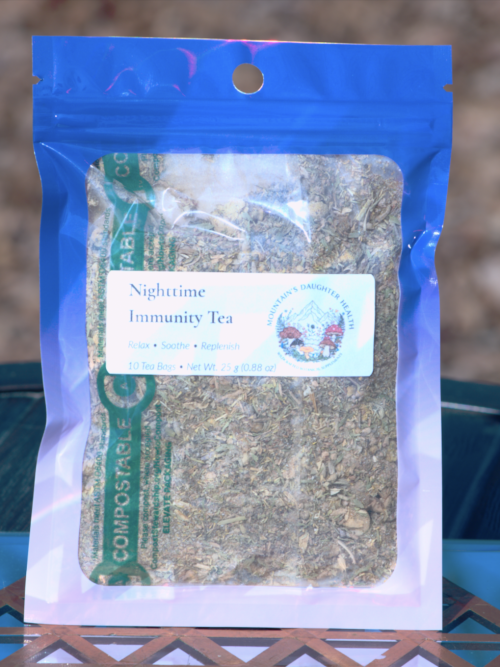
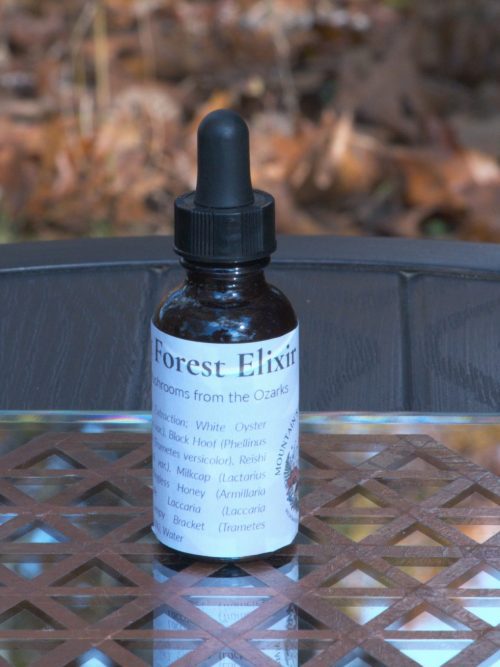
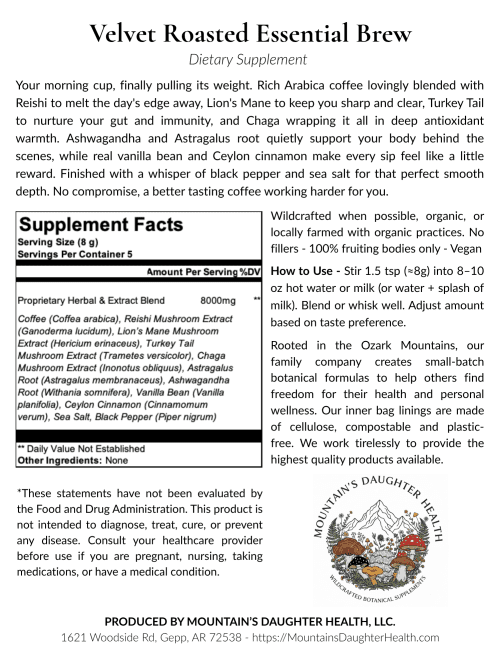
Turkey tail (Trametes versicolor, also called Coriolus versicolor) is a thin, leathery bracket fungus that grows in overlapping fans on dead hardwood, banded in browns, tans, and blues like a turkey’s tail feathers. It is too tough to eat, so it has always been taken as a tea or extract. Of all the mushrooms in our blends, it has the longest record in medical research.
What Is in It
Turkey tail’s best-known compounds are two polysaccharides bound to protein: PSK (polysaccharide krestin), used in Japan, and PSP (polysaccharopeptide), used mostly in China. Both are water-soluble, which is why hot-water extraction suits this mushroom (Saleh et al., 2017).
What the Evidence Shows
Alongside cancer treatment. Purified turkey tail extracts are approved as an adjunct to cancer treatment in Japan and China. A review of PSP’s effects on the immune system concludes that how it works is still not well understood and that rigorous randomized trials are needed (Saleh et al., 2017). The strongest single result is for PSK: a meta-analysis of eight randomized trials with 8,009 patients who had surgery for stomach cancer found modestly better survival when PSK was added to chemotherapy (hazard ratio 0.88) (Oba et al., 2007). These are standardized drugs used under medical care, and their results do not transfer to teas or tinctures.
Immune measures. In a phase 1 trial, nine women who had recently finished breast cancer treatment took 3, 6, or 9 g of a turkey tail preparation daily for 6 weeks. It was well tolerated at every dose, with trends toward higher lymphocyte counts and natural killer cell activity at the higher doses (Torkelson et al., 2012). A phase 1 trial is designed to test safety and dose, not benefit.
The gut. In a small randomized trial of 24 healthy volunteers, PSP produced clear, consistent changes in the gut microbiome consistent with a prebiotic, the kind of fiber that feeds beneficial bacteria, while each person’s baseline microbiome remained the strongest influence (Pallav et al., 2014).
In Short
Turkey tail is a well-researched mushroom with a strong record as a purified medical adjunct and small, early human studies of whole preparations. It is a supportive botanical, not a treatment for cancer or any immune condition. If you are in cancer treatment, talk with your oncology team before adding any mushroom product.
The research behind this entryReferences
Show sourcesHide sources
- Oba, K., Teramukai, S., Kobayashi, M., Matsui, T., Kodera, Y., & Sakamoto, J. (2007). Efficacy of adjuvant immunochemotherapy with polysaccharide K for patients with curative resections of gastric cancer. Cancer Immunology, Immunotherapy, 56(6), 905–911. https://doi.org/10.1007/s00262-006-0248-1
- Pallav, K., Dowd, S. E., Villafuerte, J., Yang, X., Kabbani, T., Hansen, J., Dennis, M., Leffler, D. A., Newburg, D. S., & Kelly, C. P. (2014). Effects of polysaccharopeptide from Trametes versicolor and amoxicillin on the gut microbiome of healthy volunteers: A randomized clinical trial. Gut Microbes, 5(4), 458–467. https://doi.org/10.4161/gmic.29558
- Saleh, M. H., Rashedi, I., & Keating, A. (2017). Immunomodulatory properties of Coriolus versicolor: The role of polysaccharopeptide. Frontiers in Immunology, 8, Article 1087. https://doi.org/10.3389/fimmu.2017.01087
- Torkelson, C. J., Sweet, E., Martzen, M. R., Sasagawa, M., Wenner, C. A., Gay, J., Putiri, A., & Standish, L. J. (2012). Phase 1 clinical trial of Trametes versicolor in women with breast cancer. ISRN Oncology, 2012, Article 251632. https://doi.org/10.5402/2012/251632