
Photobiomodulation and Red Light Therapy: The Evidence
A closer look at the first of the Three Signals: what red light actually does in the body, where the research is strong, where it is thin, and why restraint matters more than intensity

Ten minutes of sun and four hours of sun come from the same source. Yet one leaves you warm and awake, while the other leaves you burned. Why?
The answer is dose. That is the most important idea in photobiomodulation, and it is also the one most often left out when red light devices are sold. In One Body, Three Signals I described light as the first of three signals the body receives. This piece, however, goes much further: what red light therapy is, what the research says it does inside a cell, where the clinical evidence is strongest, where it has not caught up with the marketing, and one area where it calls for real caution.
One practice, several names
Red light therapy, low-level laser therapy, and photobiomodulation describe the same family of practices: using certain wavelengths of red or near-infrared light to produce physiological effects in cells and tissues. Research began in the late 1960s with the newly invented laser (light amplification by stimulated emission of radiation), which is why the older name is low-level laser therapy. For decades, lasers were the standard tool. In recent years, however, non-coherent sources such as light-emitting diodes (LEDs) have become common, with practical advantages: they avoid laser-specific safety concerns, suit home use, cover large areas at once, can be worn, and cost far less (Heiskanen & Hamblin, 2018).
That shift explains why red light panels now hang in gyms, spas, and bathrooms. It also explains why the claims attached to them vary so widely. After all, a panel, a handheld wand, and a clinical laser are all “red light therapy,” yet they are not interchangeable.
Light has to be absorbed
For light to do anything in a cell, something in the cell has to absorb it. Light that reflects off the skin or passes straight through changes nothing. For that reason, the first question in photobiomodulation is always the same: what, exactly, is absorbing the light?
The best-studied answer is an enzyme in the mitochondria called cytochrome c oxidase, which absorbs light extending into the near-infrared range. The leading hypothesis is that absorbed photons release nitric oxide that has been inhibiting the enzyme, which allows more electron transport, a higher mitochondrial membrane potential, and more ATP production. In addition, a second hypothesis involves light-sensitive ion channels that let calcium into the cell. After those first events, a cascade of signaling follows, reaching genes involved in protein synthesis, cell migration, inflammation, and antioxidant defense (de Freitas & Hamblin, 2016).
Two words in that paragraph deserve attention: leading hypothesis. The same review opens by noting that the field has still not gained widespread acceptance, largely because of uncertainty about how it works (de Freitas & Hamblin, 2016). In short, the absorption is well established, but the full chain from absorption to benefit is still being worked out.
More is not better
Researchers describe photobiomodulation as following a biphasic dose response. Low levels of light have repeatedly produced better effects on stimulating and repairing tissue than higher levels, and the relationship is often drawn as a curve that rises, peaks, and falls (Huang et al., 2009). Similarly, a later update found the same pattern in the lab: ATP and mitochondrial membrane potential rose and then fell as dose increased, reactive oxygen species showed two separate peaks, and in mice with traumatic brain injury, both the number of treatments and the energy per treatment showed a peak beyond which benefit declined (Huang et al., 2011).
This is why a cheap panel run for as long as possible is not a better version of a careful session. In fact, it may be a worse one. The same curve also explains part of why the research looks inconsistent: poorly chosen wavelengths, intensities, and timing have produced negative studies alongside positive ones (Huang et al., 2009). In other words, the skill in this work is not intensity. It is restraint.
What the research shows
Here is where red light therapy has been studied most, with the strength of each finding stated plainly. A note on reading the numbers: several pain studies use a 100-millimeter visual analogue scale, where a person marks their pain on a line. A reduction of 20 millimeters means the mark moved about a fifth of the way toward “no pain.”
Pain: some of the strongest evidence
In neck pain, a meta-analysis of 16 randomized trials (820 patients) found that low-level laser therapy reduced pain compared with placebo, by about 20 millimeters on the 100-millimeter scale across 11 trials. Moreover, in chronic neck pain, the relief persisted for up to 22 weeks after treatment ended, and side effects were mild and no different from placebo (Chow et al., 2009).
In knee osteoarthritis, a meta-analysis of 22 placebo-controlled trials (1,063 participants) found pain reduced by about 14 millimeters at the end of treatment and about 16 millimeters at follow-up. When doses matched the World Association for Laser Therapy recommendations, the effect was larger, peaking at about 32 millimeters beyond placebo two to four weeks after treatment. Disability also improved. Even so, the authors point out that low-level laser therapy is still not recommended in major knee osteoarthritis guidelines, and their analysis suggests dose may be part of why earlier reviews disagreed (Stausholm et al., 2019).
Oral mucositis: a guideline recommendation
An international guideline group recommends photobiomodulation for preventing oral mucositis, the painful mouth sores that can follow cancer treatment, in specific settings such as stem cell transplantation and head and neck radiotherapy, using specific protocols. For treating mucositis once it has developed, however, the evidence was not adequate for any recommendation (Zadik et al., 2019).
Skin: promising, from a small evidence base
In a controlled trial of 136 volunteers, people treated twice a week with red or broader red-to-near-infrared light for 30 sessions showed improved skin complexion, reduced roughness, and increased collagen density on ultrasound compared with 23 untreated controls, and blinded reviewers of photographs confirmed the improvement. The broader spectrum showed no advantage over red light alone (Wunsch & Matuschka, 2014). That is an encouraging result, although it comes from a single trial with a small control group.
Hair: consistent, with wide variation
A meta-analysis of randomized trials found low-level laser light therapy superior to placebo for hair growth in men with androgenetic alopecia, alongside minoxidil and finasteride, while noting high heterogeneity among studies. At the time, one laser device was among the few treatments the U.S. Food and Drug Administration recognized for the condition, as an FDA-cleared device (Adil & Godwin, 2017). Likewise, a 2025 meta-analysis of 38 studies (3,098 patients, almost all with androgenetic alopecia) found hair density increased significantly with light therapy compared with placebo, again with high heterogeneity, and found too little data to judge other types of hair loss (Perez et al., 2025).
Muscle performance: early and uneven
A systematic review of 39 trials in healthy people found some effect favoring photobiomodulation for time to exhaustion, repetitions, peak torque, and blood lactate, but rated the quality of evidence very low to moderate, citing small samples and wide variation in exercise protocols and light parameters (Vanin et al., 2018).
Eyes: an area for real caution
Red light aimed into the eye is being studied in children with myopia. In a randomized trial of 264 children, three-minute sessions twice daily with a 650-nanometer device slowed eye elongation over 12 months (0.13 mm versus 0.38 mm with glasses alone), with no structural damage observed in the trial (Jiang et al., 2022). A later trial in children with high myopia reported even stronger results (Xu et al., 2024).
Then, however, the safety signal arrived. A 12-year-old who used such a device for five months developed vision loss in both eyes and damage to the light-sensing layers of the retina, which only partially recovered after she stopped (Liu et al., 2023). Meanwhile, researchers who measured the output of two of these devices found that three minutes of continuous viewing approached or exceeded the maximum permissible exposure for retinal damage, and urged clinicians to be cautious until safety standards are confirmed (Ostrin & Schill, 2024).
In other words, this is clinical research supervised by eye specialists, not something to try at home, and it is a sharp reminder that the eye is not skin. Never look into a red light panel or laser, and never use red light on a child’s eyes outside a supervised clinical setting.
A note on green
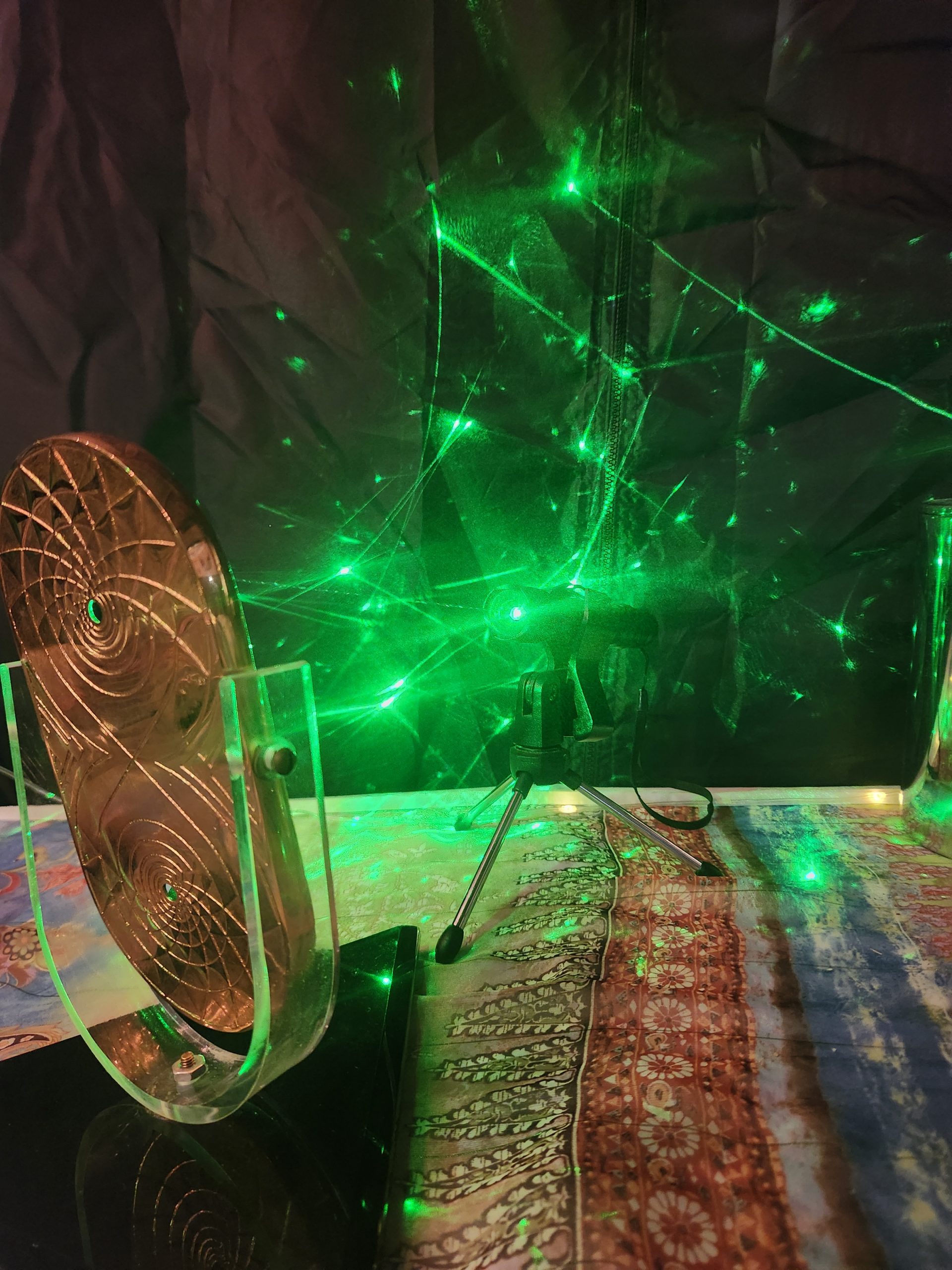
Green light comes up often in our work. In a small preliminary study of 29 people with migraine, daily exposure to green light-emitting diodes over ten weeks was followed by fewer headache days per month, from about 8 to 2 in episodic migraine and from about 22 to 9 in chronic migraine (Martin et al., 2021). However, the design was not randomized, the outcomes were self-reported, and the authors call for larger trials. Also, this is light received through the eyes and nervous system, a different pathway from classic photobiomodulation, and it does not support the idea that green light “detoxifies” anything. Within Auric Structuring™, green stands for renewal, and we say plainly that this is symbolism we have chosen, not a biological claim.
The research at a glance
| Use | What the research shows | Our read of the strength |
|---|---|---|
| Mechanism | A mitochondrial enzyme absorbs red and near-infrared light; the rest of the chain is a leading hypothesis | Established absorption, developing mechanism |
| Neck pain | 16 trials; about 20 mm less pain on a 100 mm scale; chronic relief up to 22 weeks | Moderate, from meta-analysis |
| Knee osteoarthritis | 22 trials; pain and disability reduced, larger at recommended doses | Moderate, not yet in major guidelines |
| Oral mucositis prevention | Recommended in specific cancer treatment settings with specific protocols | Guideline recommendation |
| Skin | One controlled trial; improved complexion, roughness, and collagen density | Promising, limited |
| Hair (androgenetic alopecia) | Better than placebo across meta-analyses, with high heterogeneity | Moderate, variable |
| Muscle performance | Some benefit; very low to moderate quality evidence | Early |
| Myopia in children | Slowed eye growth in trials; retinal injury reported; devices may exceed exposure limits | Clinical only, safety unsettled |
| Green light and migraine | One small preliminary study | Very early |
How to read a red light claim
Because dose decides direction, a red light claim is only as good as its details. So, before believing one, ask:
- What wavelength? Red and near-infrared behave differently, and green is a different pathway entirely.
- What dose? Power, distance, and time together determine how much light reaches tissue.
- For whom, and for what? Results in knee osteoarthritis do not transfer to wrinkles, and results in clinics do not automatically transfer to home panels.
- Compared with what? A sham or placebo light tells you far more than a before-and-after photo.
- How were the eyes protected? Any device that skips this question has probably skipped others too.
What this means for our sessions
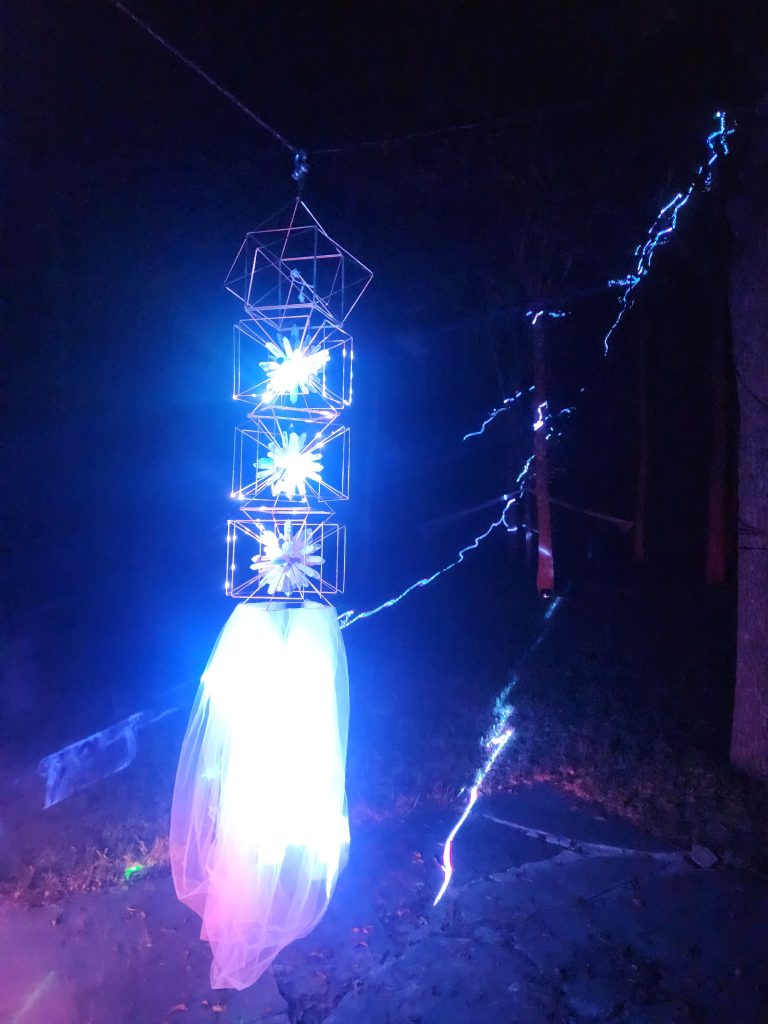
Our light work uses coherent light, crystal, and geometry, arranged as an environment rather than aimed as a single device. However, we have not measured the dose of light a person receives in our installations, and because dose determines direction on the biphasic curve, we do not claim that our installations deliver a therapeutic dose. On our Evidence Gradient, the absorption of light by mitochondria sits in the first tier, the clinical findings above sit mostly in the second, any photobiomodulation claim for an installation sits in the third, and the experience of resting in a space of light sits in the fourth.
Above all, safety comes first with lasers. For this reason, beams are aimed at sculpture and into open air, kept well away from where anyone sits or stands, and never directed at eyes. Likewise, nobody should look into a beam or hold a phone camera in its path.
The skill in this work is not intensity. It is restraint.
To experience light work in person, see Auric Structuring™ & Photobiomodulation sessions, or read about the Portal of Light installation.
What would change if every red light device came with its dose on the label?
The research behind this articleReferences
Show sourcesHide sources
- Adil, A., & Godwin, M. (2017). The effectiveness of treatments for androgenetic alopecia: A systematic review and meta-analysis. Journal of the American Academy of Dermatology, 77(1), 136–141.e5. https://doi.org/10.1016/j.jaad.2017.02.054
- Chow, R. T., Johnson, M. I., Lopes-Martins, R. A. B., & Bjordal, J. M. (2009). Efficacy of low-level laser therapy in the management of neck pain: A systematic review and meta-analysis of randomised placebo or active-treatment controlled trials. The Lancet, 374(9705), 1897–1908. https://doi.org/10.1016/S0140-6736(09)61522-1
- de Freitas, L. F., & Hamblin, M. R. (2016). Proposed mechanisms of photobiomodulation or low-level light therapy. IEEE Journal of Selected Topics in Quantum Electronics, 22(3), 348–364. https://doi.org/10.1109/JSTQE.2016.2561201
- Heiskanen, V., & Hamblin, M. R. (2018). Photobiomodulation: Lasers vs. light emitting diodes? Photochemical & Photobiological Sciences, 17(8), 1003–1017. https://doi.org/10.1039/c8pp00176f
- Huang, Y.-Y., Chen, A. C.-H., Carroll, J. D., & Hamblin, M. R. (2009). Biphasic dose response in low level light therapy. Dose-Response, 7(4), 358–383. https://doi.org/10.2203/dose-response.09-027.Hamblin
- Huang, Y.-Y., Sharma, S. K., Carroll, J., & Hamblin, M. R. (2011). Biphasic dose response in low level light therapy: An update. Dose-Response, 9(4), 602–618. https://doi.org/10.2203/dose-response.11-009.Hamblin
- Jiang, Y., Zhu, Z., Tan, X., Kong, X., Zhong, H., Zhang, J., Xiong, R., Yuan, Y., Zeng, J., Morgan, I. G., & He, M. (2022). Effect of repeated low-level red-light therapy for myopia control in children: A multicenter randomized controlled trial. Ophthalmology, 129(5), 509–519. https://doi.org/10.1016/j.ophtha.2021.11.023
- Liu, H., Yang, Y., Guo, J., Peng, J., & Zhao, P. (2023). Retinal damage after repeated low-level red-light laser exposure. JAMA Ophthalmology, 141(7), 693–695. https://doi.org/10.1001/jamaophthalmol.2023.1548
- Martin, L. F., Patwardhan, A. M., Jain, S. V., Salloum, M. M., Freeman, J., Khanna, R., Gannala, P., Goel, V., Jones-MacFarland, F. N., Killgore, W. D. S., Porreca, F., & Ibrahim, M. M. (2021). Evaluation of green light exposure on headache frequency and quality of life in migraine patients: A preliminary one-way cross-over clinical trial. Cephalalgia, 41(2), 135–147. https://doi.org/10.1177/0333102420956711
- Ostrin, L. A., & Schill, A. W. (2024). Red light instruments for myopia exceed safety limits. Ophthalmic and Physiological Optics, 44(2), 241–248. https://doi.org/10.1111/opo.13272
- Perez, S. M., Vattigunta, M., Kelly, C., & Eber, A. (2025). Low-level laser and LED therapy in alopecia: A systematic review and meta-analysis. Dermatologic Surgery, 51(2), 179–183. https://doi.org/10.1097/DSS.0000000000004442
- Stausholm, M. B., Naterstad, I. F., Joensen, J., Lopes-Martins, R. Á. B., Sæbø, H., Lund, H., Fersum, K. V., & Bjordal, J. M. (2019). Efficacy of low-level laser therapy on pain and disability in knee osteoarthritis: Systematic review and meta-analysis of randomised placebo-controlled trials. BMJ Open, 9(10), Article e031142. https://doi.org/10.1136/bmjopen-2019-031142
- Vanin, A. A., Verhagen, E., Barboza, S. D., Costa, L. O. P., & Leal-Junior, E. C. P. (2018). Photobiomodulation therapy for the improvement of muscular performance and reduction of muscular fatigue associated with exercise in healthy people: A systematic review and meta-analysis. Lasers in Medical Science, 33(1), 181–214. https://doi.org/10.1007/s10103-017-2368-6
- Wunsch, A., & Matuschka, K. (2014). A controlled trial to determine the efficacy of red and near-infrared light treatment in patient satisfaction, reduction of fine lines, wrinkles, skin roughness, and intradermal collagen density increase. Photomedicine and Laser Surgery, 32(2), 93–100. https://doi.org/10.1089/pho.2013.3616
- Xu, Y., Cui, L., Kong, M., Li, Q., Feng, X., Feng, K., Zhu, H., Cui, H., Shi, C., Zhang, J., & Zou, H. (2024). Repeated low-level red light therapy for myopia control in high myopia children and adolescents: A randomized clinical trial. Ophthalmology, 131(11), 1314–1323. https://doi.org/10.1016/j.ophtha.2024.05.023
- Zadik, Y., Arany, P. R., Fregnani, E. R., Bossi, P., Antunes, H. S., Bensadoun, R.-J., Gueiros, L. A., Majorana, A., Nair, R. G., Ranna, V., Tissing, W. J. E., Vaddi, A., Lubart, R., Migliorati, C. A., Lalla, R. V., Cheng, K. K. F., & Elad, S. (2019). Systematic review of photobiomodulation for the management of oral mucositis in cancer patients and clinical practice guidelines. Supportive Care in Cancer, 27(10), 3969–3983. https://doi.org/10.1007/s00520-019-04890-2
Book a personalized session in the Ozarks, or bring the full experience to your festival, retreat, or event.
Founder of Mountain's Daughter Health and creator of Auric Structuring™. A mixed media artist, scholar practitioner, and wellness innovator rooted in the Ozark Mountains.
These services are not intended to diagnose, treat, cure, or prevent any disease. Mountain's Daughter Health provides wellness services and experiential wellness programming only. Consult your healthcare provider before beginning any new wellness program, especially if pregnant, nursing, or managing a chronic condition.
From the Journal
Keep reading
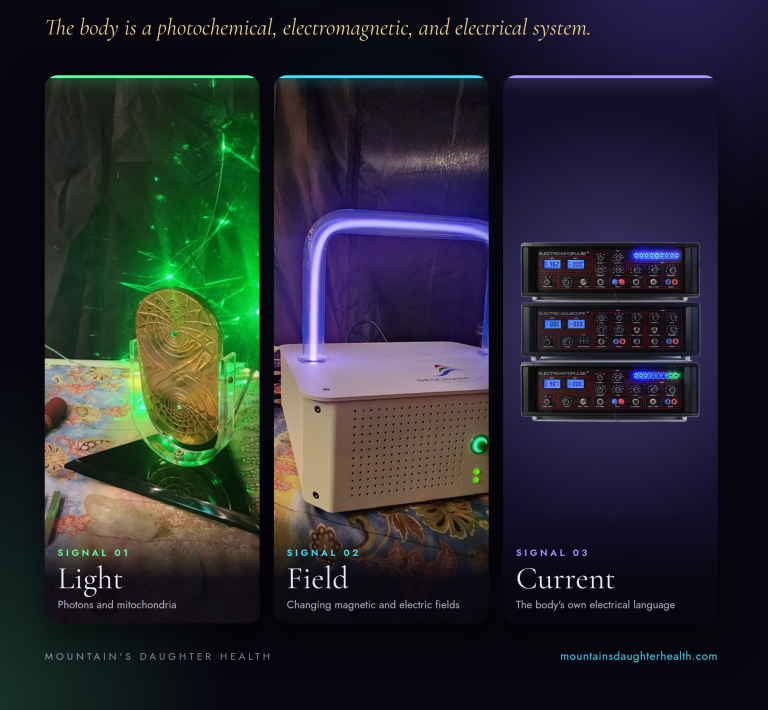
One Body, Three Signals
How I think about light, field, and current in wellness, and why I am careful about what I claim A good Ozark farmer does…
Aura, Light Body and Biofield
This compendium gathers peer-reviewed research on the aura, the light body, and the human biofield, then grades each finding on the MDH Evidence Gradient…

Biophotons Explained
Seal a room against every trace of light, sit in it until your eyes have fully adjusted, and hold up your hand. You will…